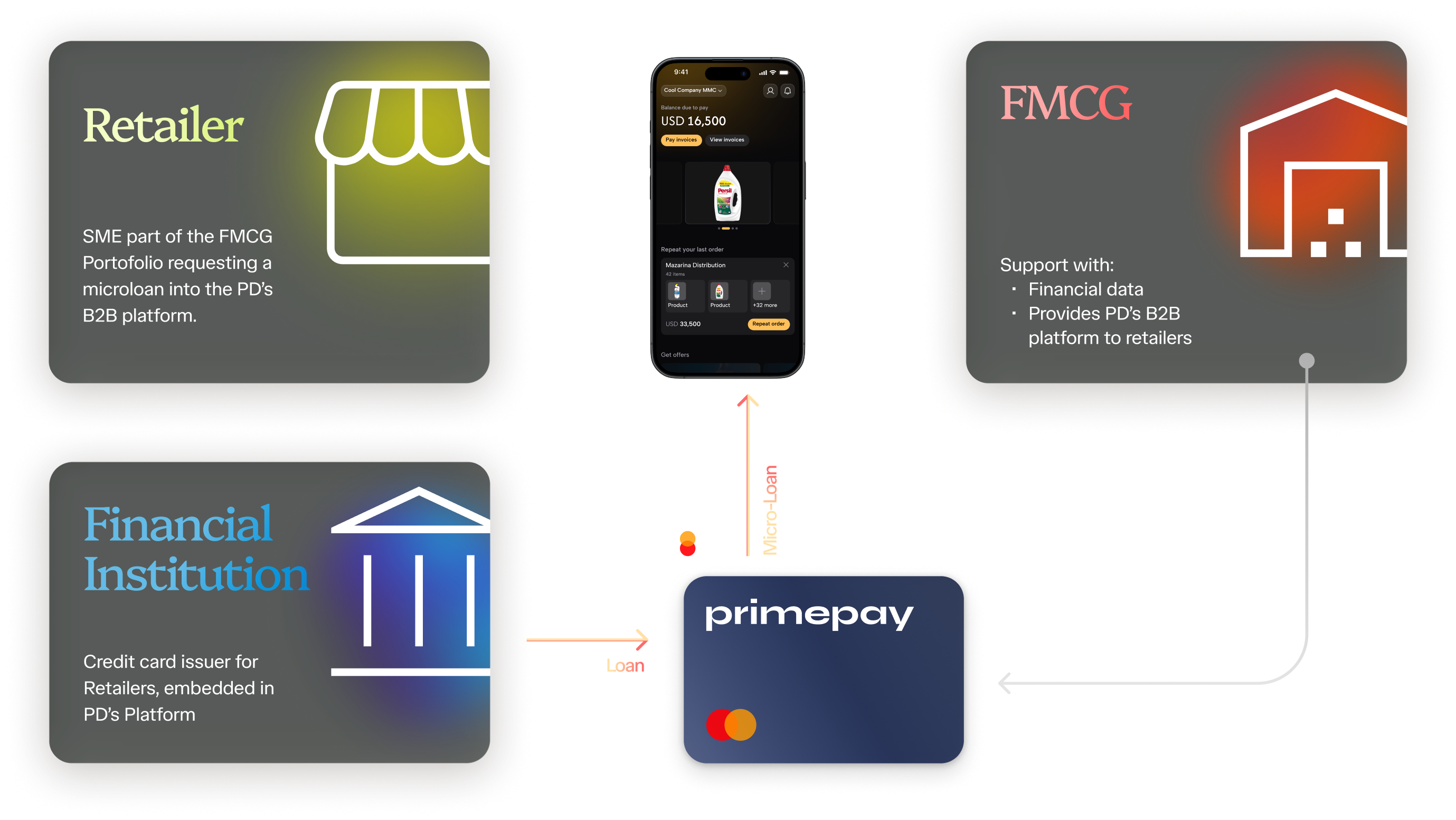







Retailer
SME part of the FMCG Portofolio requesting a microloan into the PD’s B2B platform.
FMCG
Support with:
Financial data
Provides PD’s B2B platform to retailers
Financial Institution
Credit card issuer for Retailers, embedded in PD’s Platform

Traditional trade separates capital, data, and payments, creating friction, risk, and inefficiency across FMCGs, SMEs, and banks despite real demand.
FMCGs carry commercial credit, absorbing risk.
Banks hold capital but lack live trade data to finance businesses effectively.
Payments depend on long cycles and manual collections, locking liquidity.
SMEs lack working capital, limiting orders at demand and ecosystem growth.
Trillions
The global trade finance market was valued at over $50 billion in 2025 and is projected to grow above $68 billion by 2030
Source: imarcgroup.com
Trillions
Inventory distortion caused by out-of-stocks and overstocks continues to impact retailers due to supply chain disruption and limited inventory visibility.
Source: gtreview.com
Trillions
In emerging and developing markets, SMEs face a $5.7 trillion financing gap, equivalent to nearly 20 % of GDP and total private sector credit.
Source: worldbank.com


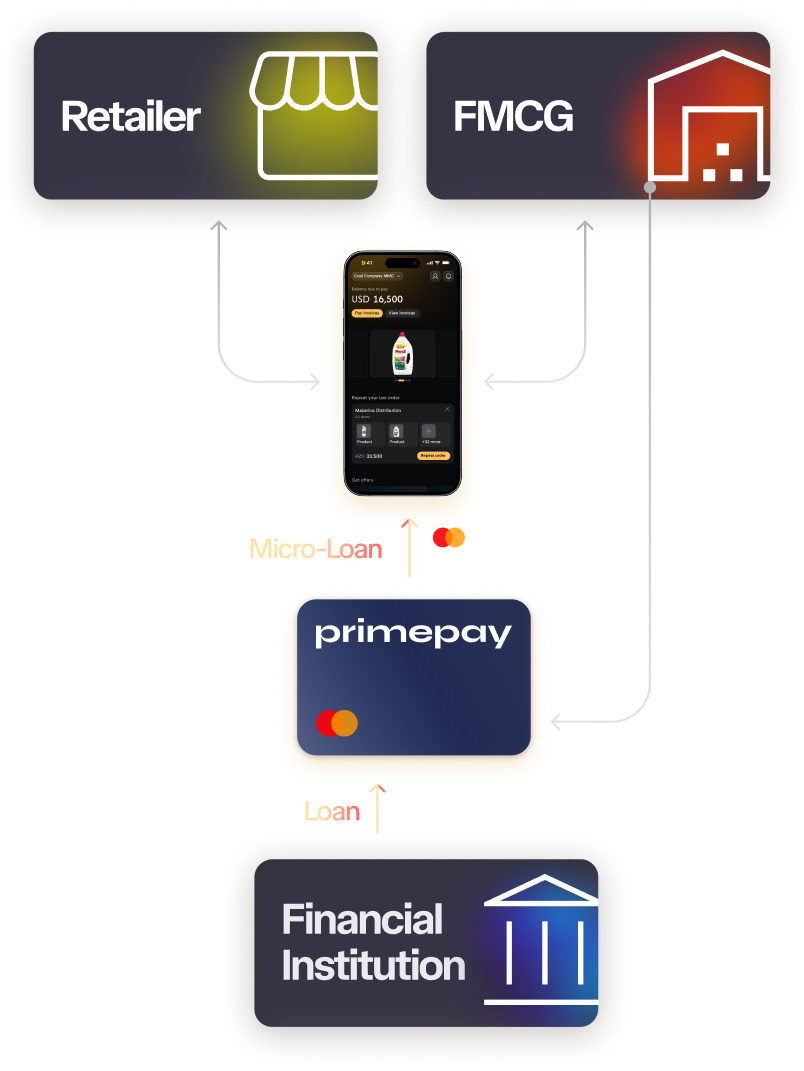
SME part of the FMCG Portofolio requesting a microloan into the PD’s B2B platform.
Support with:
Financial data
Provides PD’s B2B platform to retailers
Credit card issuer for Retailers, embedded in PD’s Platform

Retailers access micro-loans directly within existing trade relationships.
Financing decisions are based on real commercial behavior, not static financial profiles.
Closed-loop payment flows ensure predictable collections while reducing manual processes.
Connecting FMCGs, banks, and retailers through existing systems, without operational disruption.